Credit Freezes: 6 Common Misunderstandings That Leave You Exposed
A credit freeze stops new account openings but does not shield existing accounts from fraud or identity theft involving stolen credentials.

A credit freeze blocks new credit inquiries, preventing lenders from accessing your file. It does not stop identity theft, protect existing accounts, or prevent you from using your current credit cards. You must manage it separately for each major bureau and lift it when applying for new financial products.
Misreading: A freeze protects my existing credit cards
Correct reading: A credit freeze only blocks new lenders from viewing your credit report. It does not monitor or protect accounts that already exist. Imagine you have a freeze in place, but a thief steals your card number and makes purchases online. The merchant does not pull your credit report to approve a transaction; it checks the card balance and fraud filters. The freeze remains silent while your existing debt grows. You need transaction alerts or virtual card numbers to stop this type of theft. See our guide on payment card theft for methods to isolate card data from your main account.
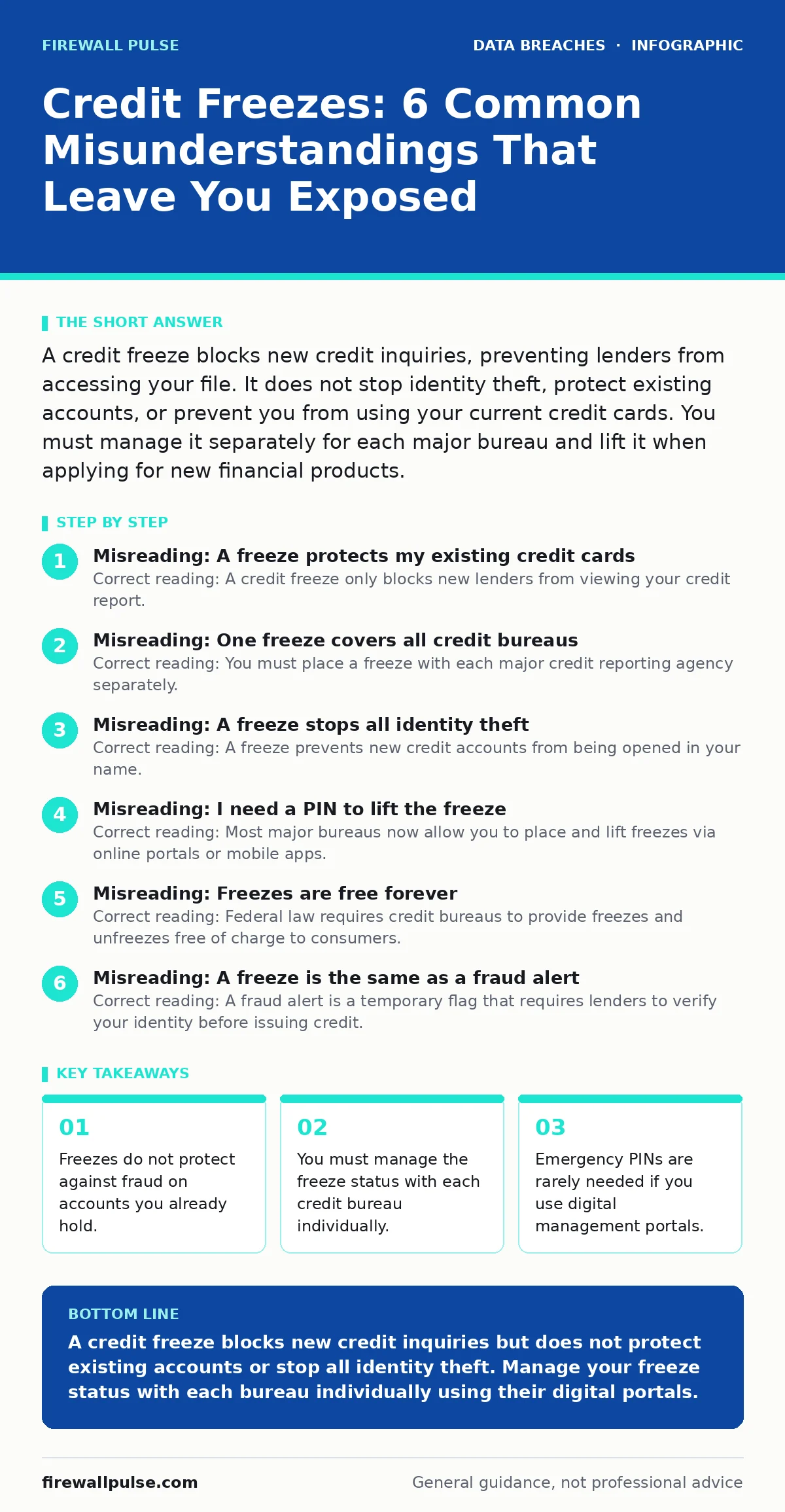
Misreading: One freeze covers all credit bureaus
Correct reading: You must place a freeze with each major credit reporting agency separately. The industry operates through distinct entities that do not share administrative controls. Placing a freeze with one bureau does not trigger a freeze with the others. If you only contact one, a lender checking the other two will see an open file and approve new credit. You need to log into each bureau’s portal or call each number to secure your full identity. This fragmentation is a design feature of the market, not a bug.
Misreading: A freeze stops all identity theft
Correct reading: A freeze prevents new credit accounts from being opened in your name. It does not stop criminals from using your identity for other purposes. Imagine a fraudster uses your Social Security number to file a fake tax return or open a utility account. These actions often do not trigger a hard credit inquiry. The freeze remains active while your financial reputation suffers. You may also face issues with employment background checks or rental applications if the landlord or employer pulls a consumer report. A freeze is a specific tool for credit access, not a blanket shield against identity misuse.
Misreading: I need a PIN to lift the freeze
Correct reading: Most major bureaus now allow you to place and lift freezes via online portals or mobile apps. You authenticate with your password and multi-factor authentication, not a physical PIN. The old system required you to mail in requests or call centres, relying on paper PINs that were easy to lose. Digital management is faster and often free. You can lift a freeze for a specific lender or for a set time period. If you still rely on a PIN, you are using an outdated process that adds friction without improving security. Check your bureau’s current digital capabilities before assuming you need to call.
Misreading: Freezes are free forever
Correct reading: Federal law requires credit bureaus to provide freezes and unfreezes free of charge to consumers. However, some states had their own laws before the federal mandate, and legacy fees may still appear in confusing billing statements. You should never pay to place or lift a freeze. If a bureau charges you, dispute the fee immediately. The cost of compliance is built into their business model. Paying for a service you are legally entitled to receive for free is a waste of resources. Always verify the current fee schedule on the bureau’s official site, as policies can change with legislation.
See also: Data Classification Mistakes That Expose Your Infrastructure · Email Account Compromise Prevention Checklist for Secure Operations
Misreading: A freeze is the same as a fraud alert
Correct reading: A fraud alert is a temporary flag that requires lenders to verify your identity before issuing credit. It lasts for one year and can be renewed. A freeze is a hard block that prevents access entirely until you lift it. A fraud alert is easier to manage but less secure. Lenders can still approve credit if they verify your identity, which a sophisticated attacker might bypass with stolen personal data. A freeze is the stricter control. Use a freeze for maximum protection against new account fraud. Use a fraud alert if you expect to apply for credit soon and want a lighter touch.
Misreading: Freezes affect my credit score
Correct reading: Placing or lifting a credit freeze does not change your credit score. The score is calculated from the data in your report, not the access permissions. Lenders cannot see your report while frozen, but the data remains unchanged. When you lift the freeze, the lender sees the same history they would have seen before. The only impact is on your ability to get new credit. If you cannot lift the freeze, you cannot apply for loans. The score itself is static during the freeze period. Do not confuse access restrictions with data integrity.
Misreading: I only need a freeze if I suspect fraud
Correct reading: A freeze is a proactive control, not just a reactive measure. You can place a freeze at any time, regardless of whether you have been a victim of fraud. It is a standard part of a defensive security posture. Waiting until you see suspicious activity means the damage may already be done. New accounts can be opened and maxed out in days. A freeze stops the door from opening. It is easier to manage a freeze proactively than to dispute fraudulent accounts later. Integrate freeze management into your regular security hygiene, alongside password reuse checks and backup testing.
Key takeaways
- Freezes do not protect against fraud on accounts you already hold.
- You must manage the freeze status with each credit bureau individually.
- Emergency PINs are rarely needed if you use digital management portals.
A credit freeze blocks new credit inquiries but does not protect existing accounts or stop all identity theft. Manage your freeze status with each bureau individually using their digital portals.
Frequently asked questions
Does a credit freeze prevent me from getting a job?
Some employers pull credit reports as part of background checks. A freeze will block this access, potentially delaying or preventing employment. You must lift the freeze temporarily for the employer to view your report.
Can I lift a freeze for just one lender?
Yes, most bureaus allow you to specify a lender or a time period for lifting the freeze. This limits exposure to a single application rather than leaving your file open indefinitely.
How long does it take to place a freeze?
Online portals typically process freezes instantly. Phone requests may take longer due to verification steps. Always confirm the freeze is active by checking your status online.
Do I need to renew my freeze annually?
No, a credit freeze remains in place indefinitely until you lift it. Unlike fraud alerts, which expire after one year, freezes do not require renewal.
How this guide was produced: written by the Firewall Pulse editorial team with AI assistance, checked against the public references listed below, and reviewed when the facts change. See our editorial policy or report an error.